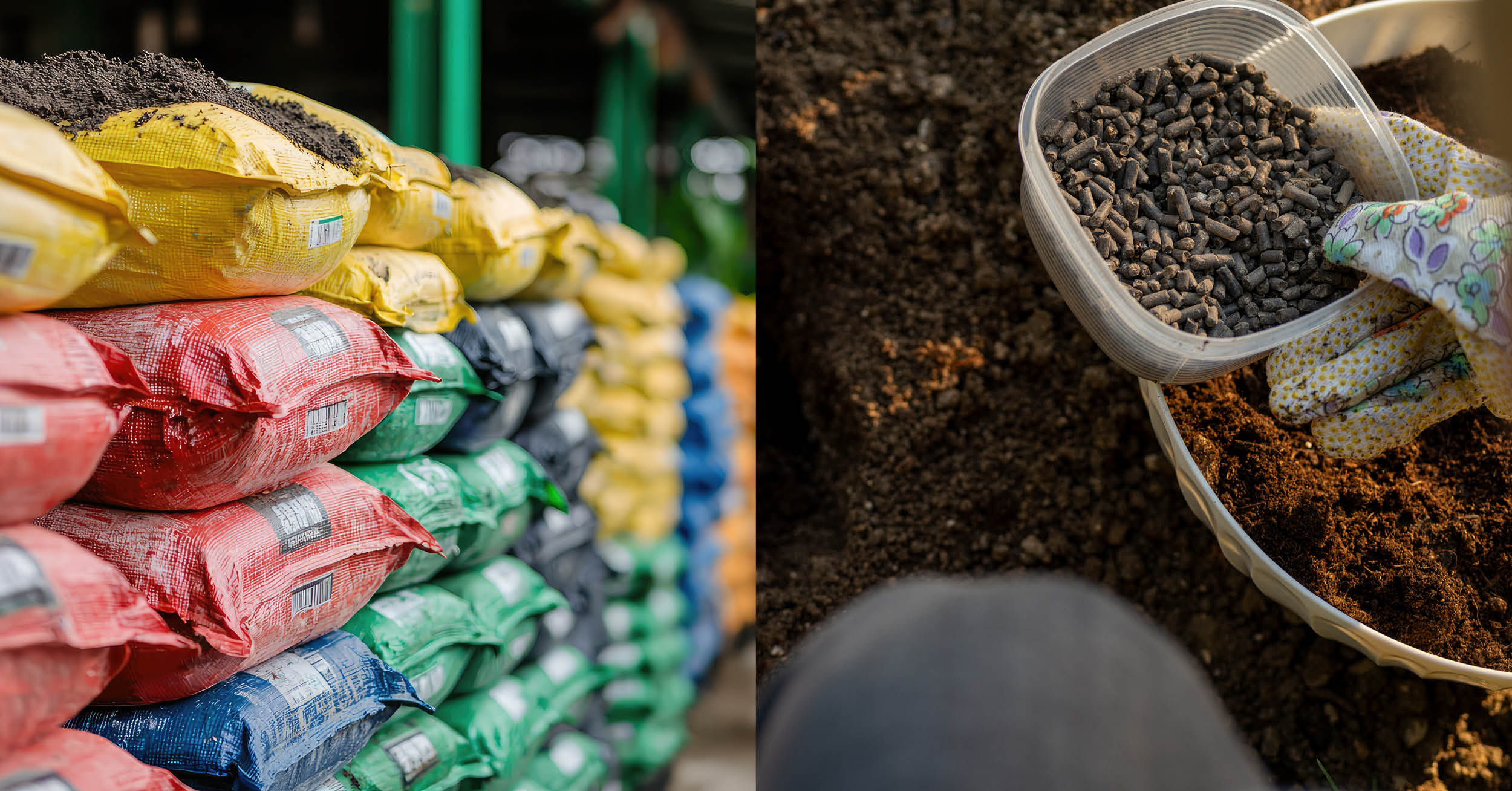
The Agricultural Utilization Research Institute is conducting a multifaceted study of the environmental and economic benefits of capturing and repurposing nutrients from agriculturally derived products. The study, in collaboration with the Minnesota Department of Agriculture and funded by the USDA Natural Resources Conservation Service (NRCS), is part of an effort to identify strategies to reduce nutrient levels in Minnesota’s surface and groundwater while also increasing rural economic activity and supporting the state’s ag economy.
Nutrients in fertilizers and animal feed, such as phosphorus, nitrogen, and potassium, can enter groundwater through agricultural runoff, creating environmental concerns. Further, due to the state’s geographic location, Minnesota’s farmers pay more for fertilizer than the national average. Therefore, more effective nutrient use and reuse in ag operations is an opportunity area for Minnesota’s agriculture industry. The study examines ways to increase the amount of nutrients recovered and repurposed at the processing and farm level, addressing environmental concerns and retaining more money in the state of Minnesota.
The first phase of the research focuses on strategies to reduce phosphorus levels in animal feed products. The second explores strategies to be more efficient in using nitrogen by removing a higher percentage of nutrients at the wastewater treatment plant level and scaling the reapplication of those nutrients back to the farm. The third segment expands on past research on intercepting nutrients before they enter groundwater using perennial or annual cover crops such as Kernza.
AURI is partnering with the University of Minnesota on ways to reduce phosphorus in animal feed. Researchers at the University are testing the effectiveness of a solvent that extracts nutrients from agricultural feedstocks, allowing the remaining byproducts to be used in animal feed diets with a better ratio of usable nutrients.
Based on experiments and research, chemists at the University hope to have results and a business case to present to the animal feed industry. The results so far have been positive, says Dr. Prasanth K.S. Pillai, an assistant professor of bioconversion & upcycling of food byproducts at the University.
“We are building a computationally informed solvent optimization system that enables precision extraction of nutrients while reducing empirical screening and development time. We aim to translate this research through a business lens so we can demonstrate to industry that nutrient extraction and upcycling can generate measurable new revenue streams,” Pillai explains.
According to Pillai, AURI is a tremendous partner for the agricultural industry. Projects like this one are great examples of collaborations that train the next generations of chemists and produce research that benefits the state’s ag economy.
“We are here to help businesses create new revenue streams while also training students to become the next generation of scientists equipped with the right skills and mindset,” Pillai continues.
For the second issue, AURI is working to identify methods to improve the circularity of nitrogen applications. Farmers use manure to fertilize their fields, but it is not always very effective. Nutrients are often lost from the fields and end up in groundwater systems. Local wastewater treatment plants have been successful in removing nutrients before discharging water back into lakes and rivers; however, to date, those nutrients are not repurposed back to farmers at a reliable rate. The result is expensive and inefficient. AURI is conducting a screening exercise to identify technologies that can capture nutrients at wastewater treatment plants and return them to local ag producers for reuse in fertilizer applications. AURI is also working with manufacturers and other businesses to develop more effective technology solutions.
“We have data that shows that we could replace almost 30 percent of the demand for nitrogen in Minnesota if we can do a better job recovering the nutrients from the application of manure in agriculture,” says Luca Zullo, AURI’s senior director of science and technology. “That has a potential environmental and economic benefit of hundreds of millions of dollars for our state.”
For the third objective, AURI is building on past research to show how cover crops and perennial crops can be used to scavenge nutrients. The research will identify ways these crops could be used to manage excess nutrients and explore value-added opportunities from their biomass, which may provide additional revenue streams for use in food, feed, or energy products.
This comprehensive research project is funded through a grant from the Minnesota Department of Agriculture and will conclude in 2027.
Zullo notes that to date, the research project has uncovered some promising findings. The topic of nutrient recovery also aligns well with AURI’s ongoing work in coproduct valorization and the field of anaerobic digestion, he says.
“The question now,” Zullo concludes, “is can we optimize what we are seeing in this work and get it to a point where it makes sense conceptually on the commercial side?”